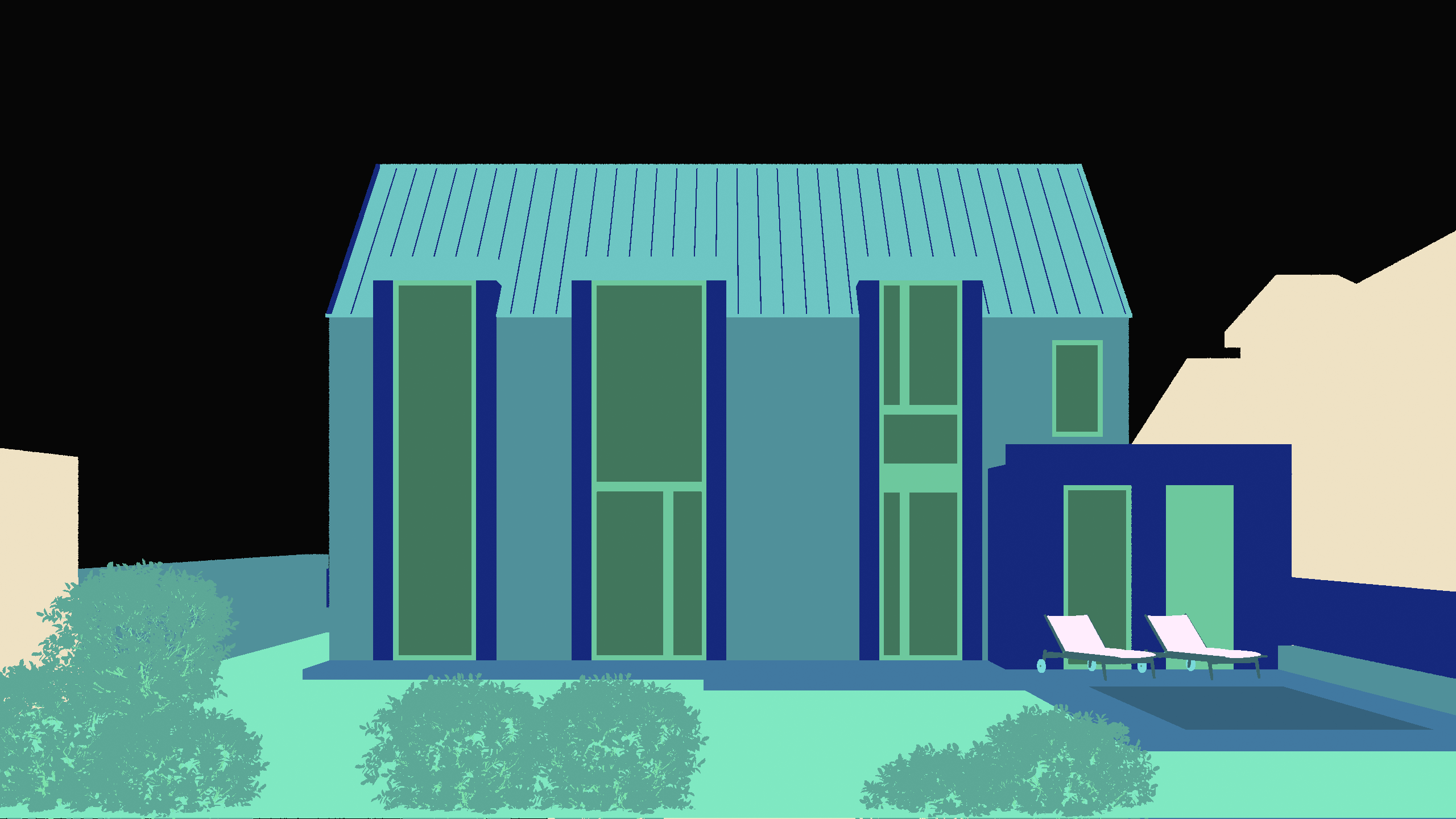
Architecture is not a generic illustration. Materials must connect logically, windows must stay where they belong, and vegetation should not hide an important entrance unless that is the intent.
Full image rerendering creates risk
When AI regenerates the whole image, it can change parts that were already correct. Segmenting the image lets the architect ask for a specific change without reopening every decision.
Design boundaries make AI useful
Segments let teams isolate facade, landscape, furniture, atmosphere, sky, or interior light. Each area can have its own instruction and its own level of intervention.
A bridge between 3D and AI
For professional teams, masks and ID map renders can connect an existing 3D workflow to AI refinement. That turns AI from a random image generator into a controlled architectural tool.
Main claim: Segmentation turns AI rendering into a controlled architectural tool.